

Reconstitutions de sites archéologiques - Modélisations & Animations 3D - Musiques – Montages – SFX – Scénarios



Good.
The time has come to give some explanations, even to the soup-throwing morons.
Provided their creator has endowed them with an ounce of reflection and binocular vision, like all of us.
In this, they differ from many animals whose eyesight is far superior to our own.
Although the idiots in question are not worthy of being considered on a par with the aforementioned animals.
I don't pretend to give a lecture on binocular vision.
Go and have a look at Wikipedia (whatever you think of it), it will explain it to you in a perfectly understandable way.
Let's just remember that binocular vision is the conjunction of two images perceived by each of the two eyes, each slightly different from the other due to the modest distance between the two eyeballs.
The field of vision of a single eye averages 150 degrees, whereas with both eyes it can cover 180 degrees.
The brain merges the two images to obtain stereoscopic vision, which enables us to appreciate distances.
So the eye is designed to see what moves, not what is fixed.
A fixed object will cause small, jerky, imperceptible eye movements, otherwise we can't see it accurately.
To prevent these movements, we would have to neutralize a part of the brain dedicated to this task...
In other words, when the object is motionless, if the gaze is totally fixed too, without movement, the human eye will have difficulty seeing it accurately.
The multiple jerky mini-movements increase the angles of view and therefore the stereoscopic data sent to the brain to discern details.
A bit like a GPS locating a surface on the ground.
The greater the number of satellites collecting and cross-referencing information from different angles, the more precise the details of the location will be.
For example, in marine navigation (if you like it), you can carry out "optical triangulation", i.e. using a bearing compass to find three landmarks (visible to the naked eye) at different angles, which you plot on a nautical chart using a "Cras ruler" or a "Breton protractor" graduated in centimetres and nautical miles (*) .
By cross-referencing the three angles, you can determine the approximate zone you're in.
"Taking stock" in the appropriate language (without computers, batteries - the old-fashioned way)
Necessarily a triangular area.
This ancient method is very useful (**), but it's impossible to get an accurate fix to within several hundred metres.
So, just as with our binocular eyes, thanks to the multitude of sources, the more points we pick up at different angles, the more the triangular area diminishes in proportion, and the more we refine the position (precision).
This is why a GPS that combines multiple beams at different angles enables metric precision positioning (or even less with military satellites).
The human eye follows the same logic when it moves in rapid jerks to determine the details of an object by multiplying viewing angles.
The difficulty arises when looking at a two-dimensional object.
In other words, a flat surface with no depth.
A painting is a flat image in two dimensions (Width and Height = X and Y), whereas a cube is a volume in three dimensions (Width, Height, Depth = X, Y and Z).
So, if you fix your gaze on a painting, you can be sure that it's necessarily stationary.
If this is not the case...you are in the presence of a paranormal phenomenon or a ghost staring back at you from its frame.
As this is quite uncommon (even in beautiful haunted Scottish castles), your binocular vision will take several readings of the entire picture, and the character's gaze will always give the same reading because it is fixed and located in a very small space.
So, logically, you shouldn't be able to detect any movement in the character's gaze.
He's supposed to be looking in the same place at all times, and your brain should be sending you consistent information about this, confirming that the character's gaze isn't changing direction... since he's not a ghost.
Okay, so far so good? (drawing is great, but to explain it can be very ...... up to you to choose the qualifier)
It's at this point that you have to realize that, between theory and reality, human nature takes over, not least through its little imperfections.
They're said to be the charm of our species.
Indeed, a perfect being would quickly become unbearable for those who aren't perfect.
Which, fortunately, is almost all of us.
So, in terms of our beautiful imperfections :
- when a two-dimensional face has no depth information on a (2D) picture
- is turned towards
- the face is turned to the left or right at an angle of no more than 5 degrees,
- his eyes are looking straight ahead, i.e. perpendicular to the surface of the painting, without turning 5 degrees or more (the face turns, but not the eyes, which always look straight ahead).
- the brain will register the fixity of the gaze, since it's not moving... and it will hesitate to determine whether the face is really frontal or just slightly turned.
The blurred information of a slight rotation of the head, less than 5 degrees, will combine with the information of fixity of the gaze and face.
- To increase this hesitation, we play with the light reflections in the pupil, and by placing them at the angle of the face (i.e. 5 degrees in its direction), the brain will register three contradictory pieces of information:
1. The hesitant face is slightly turned in one direction at an angle of less than 5 degrees,
2. The gaze is always aimed straight ahead, perpendicular to the surface of the painting,
3. The reflections in the pupils are also at an angle to the face (also 5 degrees), while the eyes, and therefore the pupils, look straight ahead.
So, the figure in the two-dimensional painting will follow you with its gaze, like a ghost, whether you move to its left, right, above or below it.
Soup's good, isn't it?
They say it makes you grow.
But it doesn't make idiots smarter.
By the way, all these explanations apply only to character number 3, of course.
The others are a different kettle of fish (geometric and optical).
Not too much at once, so as not to saturate the mind and drown the only graphic result in theoretical "soup".
But these doctrinaire explanations are perhaps easier to explain than to put into practice.
Just draw.
It doesn't matter how beautiful the line, it works even with graphic potatoes!
If you're tempted, I strongly encourage you to do so, with courage and patience.
Anyone can do it.
Granted, you might not be exhibiting at the MET, at least not right away, but you can understand a lot of things by drawing them.
Right, geometry teachers?
Drop the programs for a moment and do a bit of graphic art, students love it.
Don't you love it?
So why sully art?
Attacking a work of art is an attack on historical heritage.
Idiots know it exists, but they don't know it's theirs.
If it belongs to everyone, you might as well do what you like with it...
This terrorism of monopolizing the common good, typical of totalitarian regimes, could be applied with the same logic to those who support morons.
Some town halls are overflowing with works of art, tapestries and roofs whose ornaments have been renovated with gold leaf and public money.
Why choose a museum with little protection and not a Town Hall that supports and shelters cowards?
The latter is guarded by a police force.
In my comment on the attack on the Mona Lisa at the Louvre, I mentioned the risk of future degradation of a work unprotected by a glass wall.
And with my nod to famous water lilies, I had no idea that a work by its author would be the target of deterioration so quickly.
I'm close to the museum where Monet's painting was attacked and damaged.
And close to what it evokes.
Be careful not to confuse it with other works by Monet that bear the same generic title of "Printemps". Monet was particularly fond of Spring, so much so that he painted several of them. To identify them, we need to add the location of the work. The one on display at the Musée des Beaux-Arts in Lyon is referenced as follows:
Le Printemps (C Monet - W 586) Oil on canvas, 60 x 81 cm, 1880, Musée des Beaux-Arts, Lyon.
It depicts the Seine valley as seen from the hills overlooking Vétheuil, with La Roche-Guyon in the background (see below and click to enlarge).
In the end, more fear than harm (see: https://tribunedelyon.fr/societe/le-tableau-de-monet-asperge-de-soupe-au-musee-des-beaux-arts-de-lyon-na-pas-ete-endommage/
and: https://tribunedelyon.fr/societe/jet-de-soupe-au-musee-des-beaux-arts-le-tableau-a-ete-decroche-gregory-doucet-critique/).
I wrote to the Ministry in charge and to the two mayors concerned by these attacks on the protection of the national heritage to ask them what progress had been made with the proceedings and what measures had been taken to protect works of art (public property) from attack.
I informed them that I would publish and circulate their reply as necessary information for all citizens, or their failure to reply. Except official communiqué.
I'll let you know which.
______________________________________________________________________
(*) (...Not a road map, otherwise we'd be in the rocks - which is what I really saw)
(**) (already in use by the Phoenician navigators who set sail from Byblos or Tyre and Sidon - now Lebanon - to Ireland in search of tin, via the Hercules Columns - Strait of Gibraltar; to be done if in the 21st century you're still looking for "adventure", if you've got a few months to spare... and your guts firmly in the Bay of Biscay).

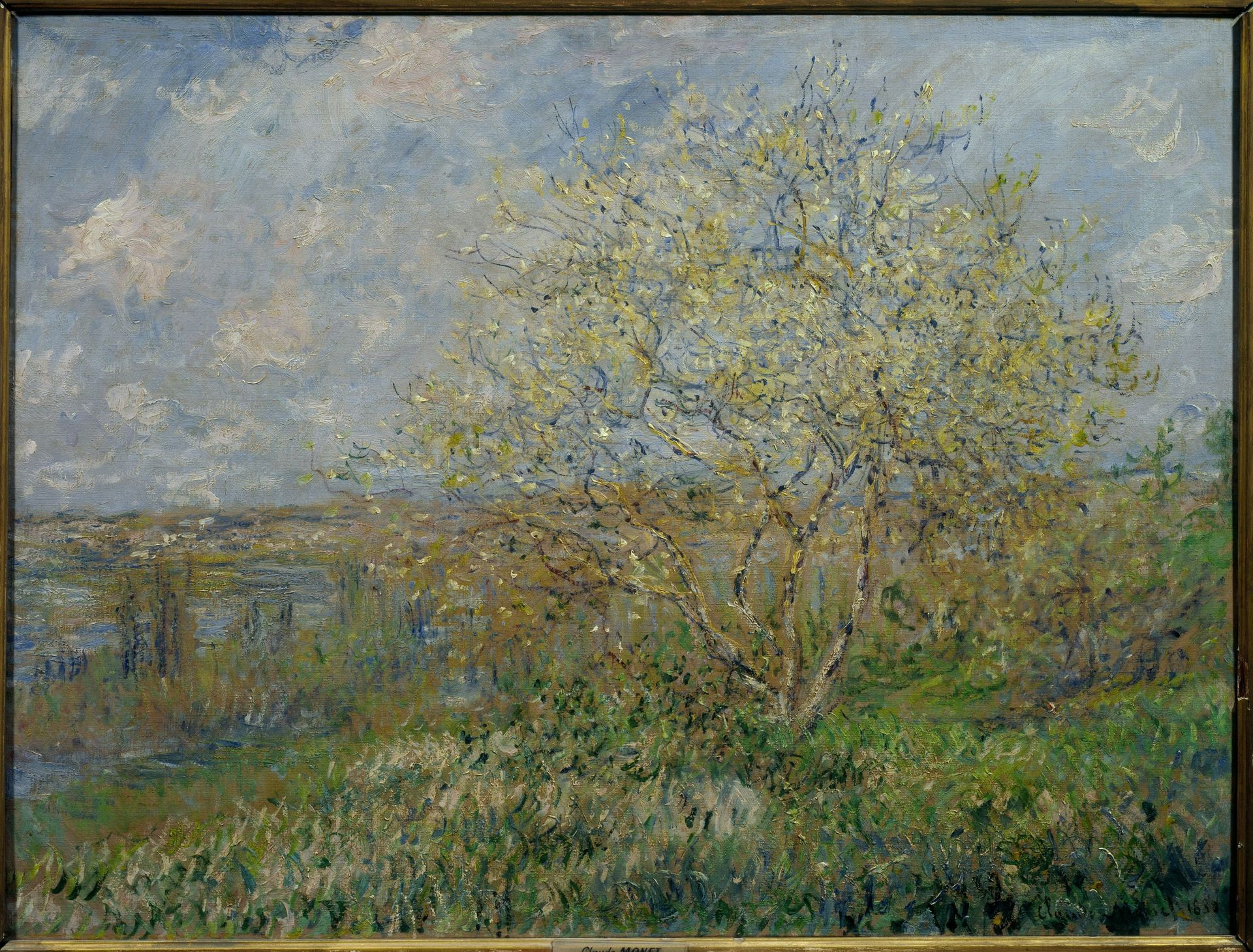
Le Printemps (C Monet - W 586) Huile sur toile, 60 x 81 cm, 1880
Reconstitutions de sites archéologiques - Modélisations & Animations 3D - Musiques – Montages – SFX – Scénarios
Philippe PETRETO
contact@archeostudio.net
MDA n° P584269

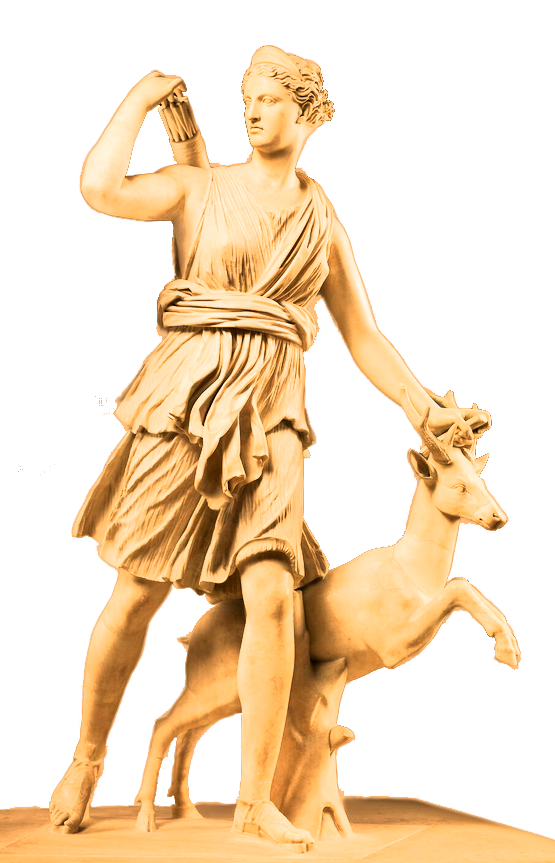
Artémis chasseresse dite Diane de Versailles
Musée du Louvre

Toutes les réalisations graphiques et audio de ce site restent la propriété d'archeostudio.net
Reproduction et diffusion interdites.
Laocoon et ses fils
Musée Pio-Clementino - Vatican
